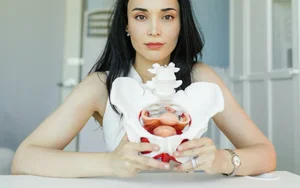
Red Light Therapy for Scars, Jaw Tension and Pelvic Health
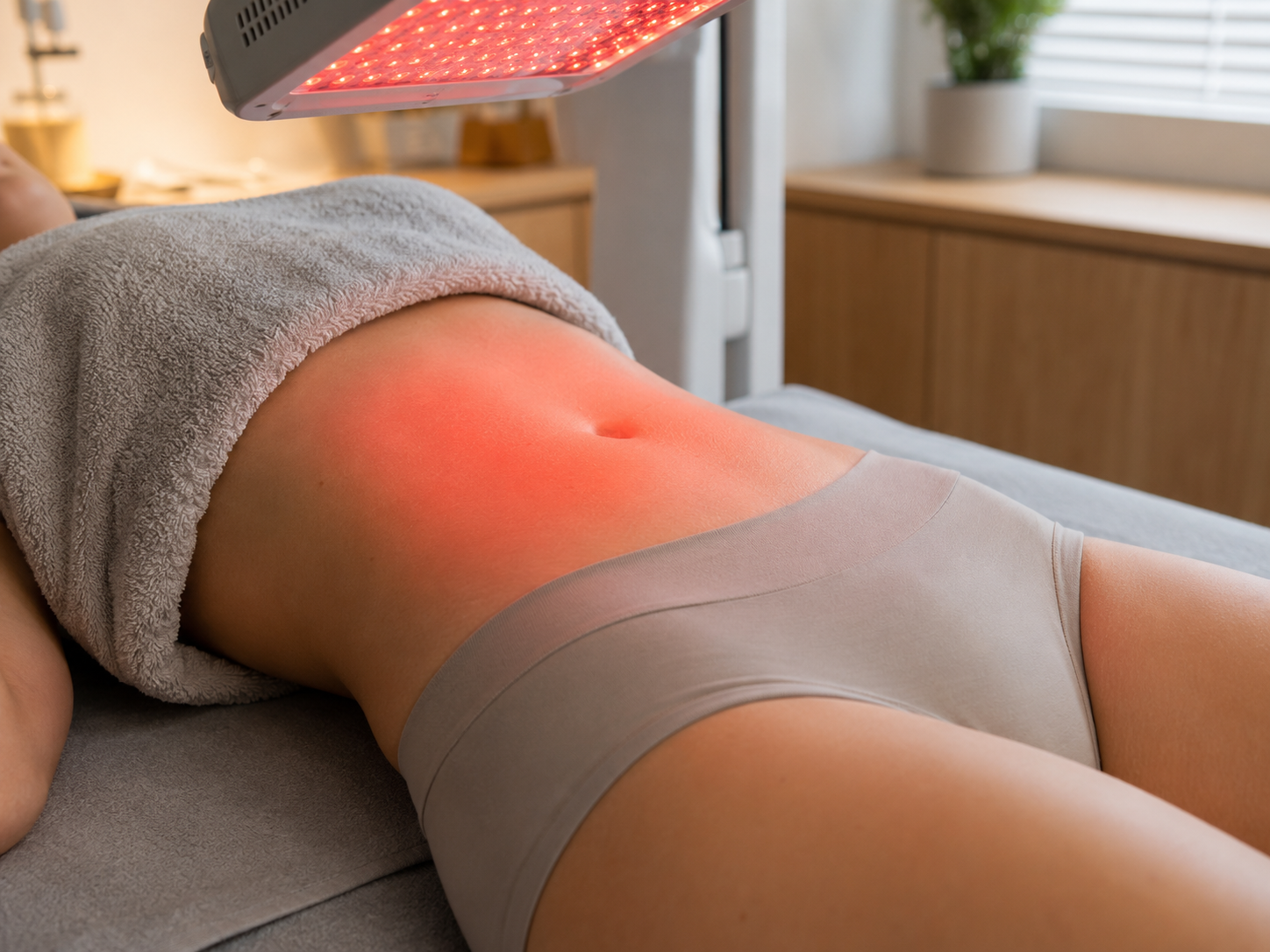
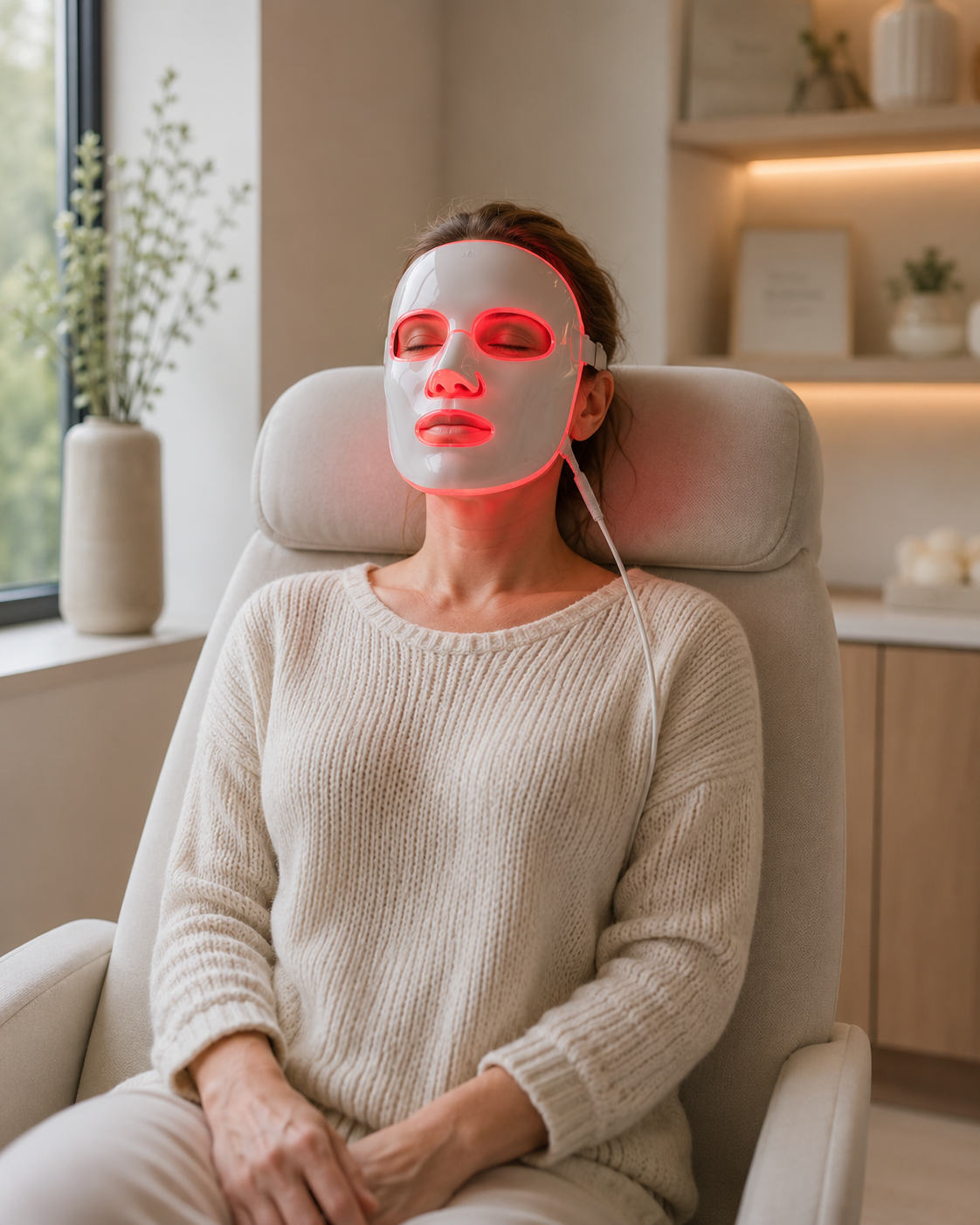
You have probably seen red light therapy marketed as a skincare treatment. Face masks, glowing panels, promises of smoother skin.
What you may not have seen is where it shows up in rehabilitation and a pelvic health clinic. Depending on the wavelength, red light therapy can assist in rehab. :
If you have a C-section scar that still feels tight two years later.
If your perineal scar is tender when you sit.
If you clench your jaw all day and your pelvic floor never seems to switch off.
If your tailbone has hurt since your baby was born.
These are the conversations we have every week at Ova.
Red light therapy is not a cure for any of them. But it does have research behind it, and it may make the rest of your rehabilitation more comfortable and more effective.
Here is what the evidence actually says, and how we think about it in practice.
⭐ Key Takeaways
Red light therapy can be used in rehabilitation to reduce pain and inflammation; support muscle, tendon, joint or nerve recovery; and improve scar maturation, redness, thickness, sensitivity, itching and flexibility by using controlled red light to support natural repair processes in the skin and the tissue just beneath it.
It may help calm inflammation, improve circulation, support tissue repair, and reduce certain kinds of pain.
It may be useful for C-section scars, perineal scars, and scars after abdominal or pelvic surgery.
Research after C-section birth and perineal trauma is encouraging but not consistent.
It may reduce pain in some jaw and TMJ conditions.
Jaw clenching and pelvic floor tightening often travel together as part of a bigger pattern of stress, breath-holding, and bracing.
Easing jaw pain may support whole-body relaxation. It has not been shown to treat the pelvic floor directly.
Early research suggests possible benefit for postpartum coccyx pain and some chronic pelvic pain.
It works best as a companion to rehabilitation, not a replacement for pelvic floor physiotherapy.
What Is Red Light Therapy?
Red light therapy is a non-invasive treatment that exposes an area of the body to controlled red or near-infrared light. Although the term red light therapy is commonly used for both, these are two different ranges of light with different depths of penetration.
Visible red light, typically delivered at wavelengths around 630–670 nanometres, acts mainly on the skin and more superficial tissues. For this reason, it is commonly associated with wound healing, scar management and other skin-related applications. Near-infrared light, often delivered at wavelengths around 810–850 nanometres, is not visible to the human eye and can reach somewhat deeper tissues. It is therefore more commonly used in rehabilitation when the intended target is a muscle, tendon, joint or nerve. Some clinical devices combine both wavelengths to address tissues at different depths.
During treatment, the light source is positioned close to or against the skin. The light interacts with light-sensitive structures inside the cells, initiating biological responses that may influence circulation, inflammation, pain and tissue repair.
To be clear about what it is not: red light therapy is not ultraviolet light; it does not tan the skin, and it is not designed to cut, burn or damage tissue.
Beyond skincare, clinical research has examined red and near-infrared light therapy for wounds and scars, muscle and joint pain, jaw pain, inflammatory conditions, nerve-related pain and chronic pain.
A large 2025 review of more than 200 randomized trials found possible benefits across several pain and health conditions. However, results varied depending on the condition being treated and factors such as the wavelength, dosage, treatment frequency and device used. The quality of the evidence ranged from very low to moderate.
Red light therapy can be a useful tool when the wavelength and treatment protocol are appropriate for the intended tissue and condition. It is not a universal answer for every type of pain.
How Does Red Light Therapy Work?
Your cells need energy to repair tissue and regulate inflammation.
Red light can be absorbed by structures inside your cells that contribute to energy production. That absorption may influence several processes involved in healing and pain.
Red light therapy may help support:
cellular energy production
local circulation
tissue oxygenation
regulation of inflammatory activity
collagen-related tissue repair
wound recovery and scar remodelling
pain reduction and muscle recovery
Think of it this way. Red light therapy does not force your body to heal. It may create a better environment for the healing your body is already trying to do.
That is also why results differ so much between people. Your response depends on the condition, the location of your symptoms, the age and quality of the tissue, when treatment starts, how long each session lasts, how often you do it, and how your own body responds.
What Are the Benefits of Red Light Therapy?
1. Skin health
Your skin is directly exposed during treatment, which makes it the most studied application.
Red light therapy may support collagen production, skin repair, local circulation, reduced redness and better tissue quality, including recovery after certain skin injuries or procedures.
Research on postoperative scars has reported possible improvements in scar thickness, colour, flexibility and appearance, especially when treatment starts in the earlier stages of scar formation. The volume and quality of this research is still limited, and findings vary between studies.
2. Wound and tissue healing
Red light therapy may influence the cells involved in wound repair and collagen production. That may support tissue closure, new tissue formation, circulation, collagen organization and tissue strength.
It cannot fix an infection, an open incision, poor circulation or a medical complication. When a wound is healing normally, it may be a helpful addition.
3. Pain reduction
This is one of the most studied benefits. Red light may influence local inflammation, circulation, nerve sensitivity and how pain signals are processed. Research has found possible benefits for jaw pain, neck pain, fibromyalgia, joint pain and some chronic musculoskeletal conditions.
Here is why this matters in a pelvic health clinic. Reducing pain does not fix the cause of your symptoms. But when you hurt less, you move more. You breathe better. You can actually do your exercises. That is often the difference between rehabilitation that works and rehabilitation that stalls.
4. Inflammation
Inflammation is a necessary part of healing. Prolonged or excessive inflammation is not, and it can contribute to swelling, pain, sensitivity and slower recovery.
Red light therapy may help regulate inflammatory activity rather than shutting it down, which can help tissue move through recovery more comfortably.
5. Muscle and joint recovery
Red light therapy has also been studied for muscle and joint concerns. It may reduce local discomfort, improve circulation around the tissue, and increase your tolerance for movement. That makes it a reasonable addition to exercise, manual therapy and rehabilitation for the right conditions.
Red Light Therapy and Scar Tissue
A scar is far more than a line on your skin.
Scar formation involves changes in collagen, connective tissue, circulation, sensation, nerve sensitivity and how different layers of tissue glide against each other.
Some scars stay soft and comfortable. Others become painful, tender, numb, raised, sensitive to touch, restricted, stuck to surrounding tissue, or uncomfortable during movement and intimacy.
Red light therapy may support collagen organization, circulation, reduced sensitivity and overall scar comfort. Recent clinical reviews describe it as a promising non-invasive addition to conventional scar management, particularly for newer postoperative and raised scars.
What it cannot do is erase a scar or guarantee that deeper restrictions will release.
A scar often also needs gradual desensitization, hands-on scar mobilization, movement retraining, abdominal rehabilitation, pelvic floor relaxation, progressive strengthening and nervous system retraining.
Our goal is not to change how your scar looks. It is to help your scar feel comfortable, move freely, stop being reactive, and work properly with the muscles around it.
Red Light Therapy for C-Section Scars
A C-section heals through several layers of abdominal tissue.
The scar you can see sits on the skin. The symptoms you feel may involve deeper connective tissue, your abdominal wall, nerves, pelvic floor and surrounding muscles.
Common experiences include tenderness, numbness, burning or tingling, sensitivity to clothing, pulling during movement, restricted abdominal mobility, discomfort during exercise, abdominal weakness, pelvic pain and pain during intercourse.
A C-section can affect pelvic floor and core function even without a vaginal delivery. Pregnancy, abdominal surgery, pain, altered breathing and protective muscle guarding all change how your abdominal wall and pelvic floor work together.
Does it help C-section healing?
A 2026 systematic review examined four randomized trials involving 473 women. Some studies reported reduced pain or reduced use of pain medication. The results were not consistent across all studies, and the review concluded the evidence is still limited because the protocols and outcome measures varied so much.
That does not mean red light therapy has no value after a C-section. It means it belongs in the supportive category rather than the guaranteed one. It may improve comfort, support the healing environment, and help you take part in postpartum rehabilitation more easily.
Full C-section recovery usually also involves scar mobility, abdominal muscle coordination, breathing mechanics, pelvic floor function, posture, lifting and carrying, return to exercise, comfort during intimacy and nervous system sensitivity.
At Ova, we look at the relationship between the scar, the abdominal wall, the pelvic floor, breathing, posture and whole-body movement. The scar is rarely the whole story.
Red Light Therapy for Perineal Tears and Episiotomy Scars
Perineal scar tissue can develop after a vaginal tear, an episiotomy, stitches, perineal surgery, treatment of a cyst or abscess, or another injury in the area.
It may contribute to pain while sitting, tenderness, pulling, sensitivity to touch, discomfort during bowel movements, pelvic floor guarding, pain during intercourse, and anxiety around being touched at all.
The research here is encouraging but mixed.
A 2024 randomized study of 56 women found that those who received red light therapy after a first- or second-degree tear or episiotomy had greater short-term pain reduction than those who received cold therapy.
A more recent double blind randomized study of 60 postpartum women found that a single red light treatment was not significantly better than a simulated treatment for pain or wound healing. The researchers suggested that future studies look at repeated treatments or different protocols.
The practical takeaway: it may help some women; one session is probably not enough, and results cannot be promised.
For an established perineal scar, rehabilitation may include scar mobility assessment, gradual desensitization, treatment of surrounding muscle tension, pelvic floor relaxation and coordination, breathing retraining, bowel and bladder strategies, and gradual preparation for intimacy.
Perineal scars stay responsive to rehabilitation months and even years after birth. It is not too late.
Other Abdominal and Pelvic Scars
Pregnancy is not the only source of scars that affect pelvic health.
You may have scars from a hysterectomy, endometriosis surgery, laparoscopy, ovarian surgery, fibroid removal, prolapse surgery, hernia repair, cyst or abscess removal, vulvar procedures or abdominal trauma.
Even a small external scar can sit in an area that feels painful, numb, sensitive or restricted.
Red light therapy may support superficial tissue recovery and scar comfort. It is not reasonable to assume that light applied to the skin will release every deeper internal restriction.
Your symptoms may also involve nerve irritation, muscle guarding, changes in abdominal strength, altered breathing, pelvic floor overactivity, fear of movement and persistent pain sensitivity.
A pelvic floor physiotherapy assessment helps sort out whether the scar is the main driver or whether several systems are contributing.
What About During Pregnancy?
Some women become interested in red light therapy during pregnancy for skin changes, jaw tension, back pain or pelvic discomfort.
Pregnancy-specific safety evidence is limited. The effects on a developing fetus have not been established, and professional guidance advises against routine treatment during pregnancy for exactly that reason.
Red light therapy should not be applied routinely over a pregnant abdomen, pelvis or lower back without approval from your maternity care provider.
The clearest applications are after birth: C-section scar recovery, perineal tears, episiotomy scars, postpartum coccyx pain, postpartum muscle and joint discomfort, jaw tension, and abdominal and pelvic rehabilitation.
Red Light Therapy for Jaw Tension and TMJ Pain

Jaw symptoms include aching around the jaw, pain while chewing, facial pain, headaches, clicking, difficulty opening your mouth, neck tension, and clenching or grinding your teeth.
A 2025 systematic review of 44 randomized studies with more than 1,800 participants reported that red light therapy could reduce pain and improve mouth opening in people with temporomandibular disorders. The researchers also noted considerable variation in how treatment was delivered across studies.
A later randomized trial found red light therapy reduced jaw pain, with results broadly comparable to other conservative treatments.
So it may be useful for certain kinds of jaw pain, particularly alongside jaw relaxation exercises, treatment of the neck, breathing retraining, stress management, dental assessment where needed, and changing clenching habits.
How Are the Jaw and Pelvic Floor Connected?
This is the part that surprises most people.
Your jaw and your pelvic floor sit at opposite ends of your body, but they often participate in the same whole body pattern. Both tighten during stress, fear, concentration, breath holding, anticipation of pain, physical effort, poor sleep and nervous system overactivation.
If you clench your jaw, there is a good chance you also hold your breath, brace your abdomen, squeeze your glutes and tighten your pelvic floor without ever noticing.
Jaw tension also affects your neck, rib cage, posture and breathing, and those changes influence how pressure moves through your abdomen and pelvis.
A small 2024 randomized study found that one session of hands on jaw treatment produced measurable changes in pelvic floor muscle activity. The researchers were careful to say the mechanisms are not fully understood and more research is needed.
Our guide to jaw tension and pelvic pain goes deeper into how clenching, breathing, posture, stress and nervous system activation feed pelvic muscle guarding.
Will red light on my jaw help my pelvic floor?
Indirectly, possibly. Directly, no.
Red light therapy may reduce local jaw pain and make it easier to relax your jaw, neck and breathing muscles. That may loosen the wider clenching pattern.
When jaw pain settles, many women find it easier to breathe without holding tension, relax the shoulders and neck, reduce abdominal bracing, notice pelvic floor tightening, practise pelvic floor downtraining and calm the nervous system.
But the research supports two separate findings, not one combined claim:
Red light therapy may help certain types of jaw pain.
Jaw treatment may influence pelvic floor muscle activity.
Those two facts do not prove that shining red light on your jaw will release your pelvic floor, resolve painful intercourse or treat chronic pelvic pain.
When jaw tension and pelvic symptoms appear together, both regions deserve assessment as part of one larger muscle, breathing and nervous system pattern.
Red Light Therapy for Chronic Pelvic Pain
Chronic pelvic pain is rarely one structure or one problem.
It may involve overactive pelvic floor muscles, painful scars, nerve sensitivity, inflammation, endometriosis, bladder or bowel concerns, painful intercourse, previous surgery, trauma, fear and muscle guarding, and heightened nervous system sensitivity.
Early research has explored red light therapy directly for chronic pelvic pain. A small pilot study of 13 women reported reduced pain after a series of treatments, with some improvement lasting several months. There was no comparison group, and several researchers had financial connections to the device manufacturer. Larger independent controlled studies are needed before anyone draws strong conclusions.
Red light therapy may eventually earn a place in chronic pelvic pain care. It does not replace a full assessment.
Physiotherapy may still need to address pelvic muscle overactivity, trigger points, breathing patterns, scar restrictions, bladder and bowel habits, nerve sensitivity, painful movement, fear of touch or insertion, and nervous system regulation.
Why We Use Red Light Therapy at Ova
We want to be direct about this, because it is easy to misread.
Red light therapy is not the treatment. It supports the treatment.
Your assessment, your hands-on care, your breathing retraining, your pelvic floor work and your loading program are the treatment. Red light therapy sits alongside them and makes them work better.

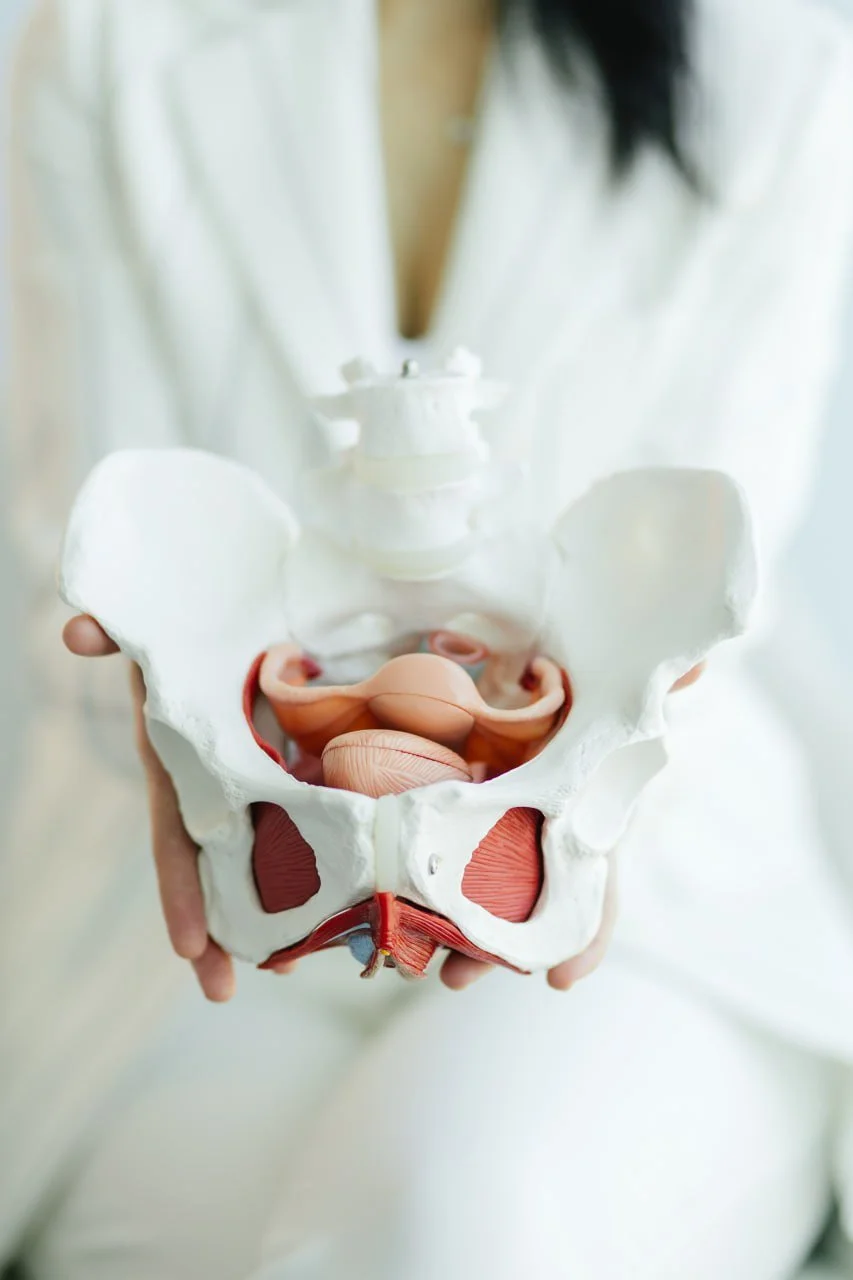

It earns its place for two reasons.
1- It helps tissue heal faster
Scars, healing incisions, irritated joints and overworked muscles all depend on circulation, oxygen and controlled inflammation. Red light therapy may support all three. When we are rehabilitating a C-section scar, a perineal scar or a painful coccyx, better tissue conditions mean the tissue responds to hands-on work and movement sooner.
2- It reduces pain, which unlocks everything else
Pain is the most common reason rehabilitation stalls. If touching your scar hurts, you avoid it. If sitting hurts, you cannot practise sitting posture. If your jaw aches, you keep clenching. If penetration hurts, downtraining feels impossible.
Reducing pain does not fix the cause. It removes the barrier. A more comfortable woman can move more, breathe more freely, tolerate manual therapy, and stay consistent with her home program. That consistency is what actually produces change.
The postpartum coccyx research shows this clearly. Red light therapy combined with pelvic floor exercises outperformed either one used alone. That is the pattern we see in the clinic too.
So when we include red light therapy in your plan, it is because we have identified a specific target: a scar, a painful jaw, an irritated coccyx, a sensitive area of tissue. It is applied for a reason, alongside a plan, with a goal.
It will not strengthen your pelvic floor. It will not teach an overactive pelvic floor to let go. It will not retrain your breathing or restore your core coordination. That is our job, and yours.
What it does is get you there with less pain and better tissue conditions along the way.
❓Frequently Asked Questions
-
No. It is marketed heavily for facial skincare, but it has also been studied for pain, wounds, scars, muscle and joint concerns, jaw disorders and tissue recovery.
-
It may support circulation, collagen organization, tissue repair and scar comfort. It cannot erase a scar or guarantee that deeper restrictions will resolve.
-
It may help with pain, tissue recovery and scar comfort. The research is promising but inconsistent, so it should sit alongside scar rehabilitation, abdominal retraining and pelvic floor physiotherapy.
-
Possibly. Some research shows short term pain reduction. A recent study found a single treatment was no better than a simulated one. Repeated treatment combined with rehabilitation may be more useful.
-
Yes, it may reduce pain and improve jaw movement in some TMJ and muscular jaw conditions. Jaw symptoms still need proper assessment, because the causes can be muscular, joint related, dental, cervical or nervous system driven.
-
Early studies are promising but preliminary. Chronic pelvic pain usually has several contributing factors, so treat red light therapy as possible support rather than a solution.
-
No. It may support pain relief and tissue recovery. Physiotherapy addresses scar mobility, muscle function, breathing, movement, strength and nervous system sensitivity.